
On Vinted, the choice of carrier affects both the availability timeframe, the network of accessible drop-off points, and the management of disputes after shipping. Vinted Go and Mondial Relay cover seemingly overlapping areas, but their logistical infrastructures differ on key structural points that we detail here.
Vinted Go’s proprietary lockers versus Mondial Relay’s merchant network
The fundamental difference between the two services lies in the type of drop-off and pick-up infrastructure. Mondial Relay relies on a network of partner merchants (dry cleaners, tobacco shops, convenience stores) that accept parcels in addition to their main business. Therefore, drop-off hours depend on the store’s opening times, with sometimes limited slots on weekends.
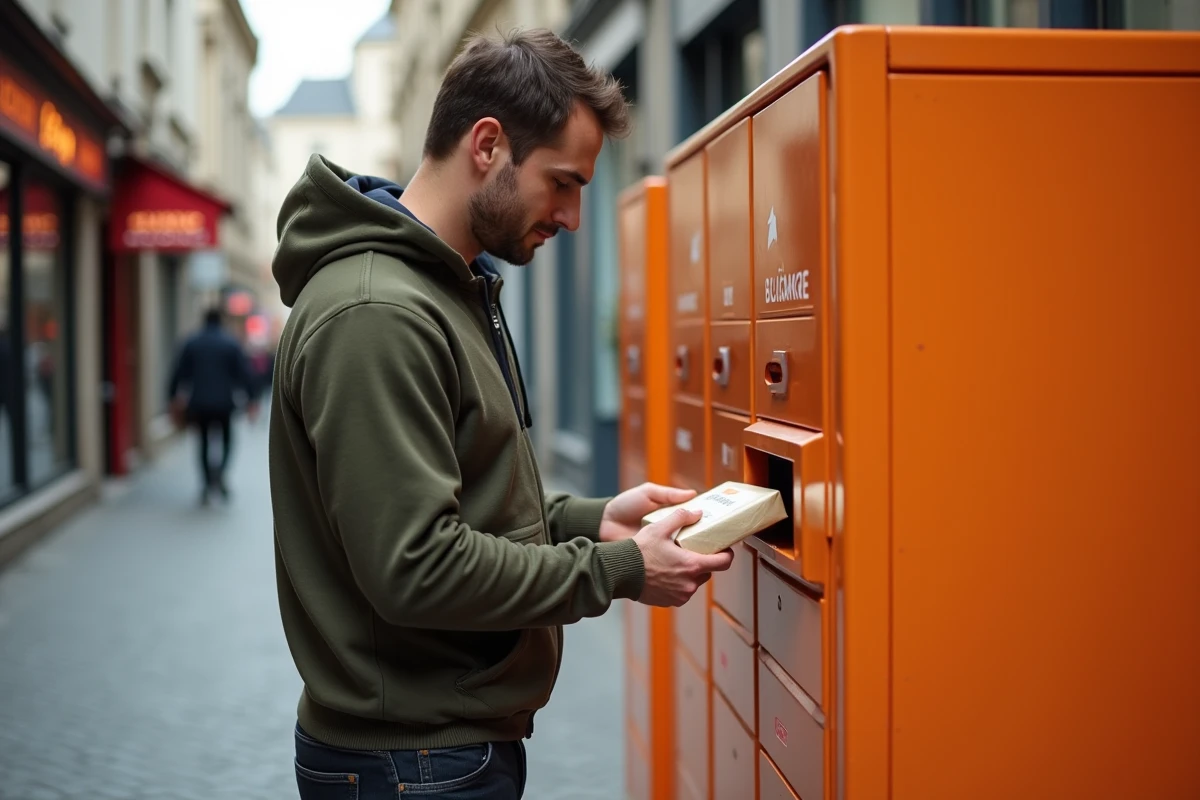
Meanwhile, Vinted Go is developing its proprietary lockers under its own brand. These automatic lockers, installed in busy areas, operate via a QR code generated in the Vinted app. Access is not dependent on any commercial hours: drop-off or pick-up can occur early in the morning or late at night, depending on the locker’s location.
We observe that this automatic locker model reduces a common annoyance: waiting at pick-up points during peak hours, especially on Saturday mornings. For a regular seller who ships several parcels a week, the constant availability of a Vinted Go locker represents a real operational time-saving. Knowing which delivery method to choose on Vinted first requires checking the local coverage of each network around one’s home.
On the other hand, Mondial Relay retains a density advantage in rural or suburban areas where Vinted Go lockers have not yet been deployed. The network of merchants remains more homogeneous across the territory at this stage.
Carrier selection errors: an interface trap on Vinted
A recurring issue arises in Vinted support groups: buyers think they have selected Mondial Relay when the order switches to Vinted Go, or vice versa. This discrepancy generates disputes, as the seller prepares their shipment for a specific network and discovers at the time of drop-off that the expected pick-up point does not match.
The identified cause relates to the ergonomics of the carrier selection screen in the app. When finalizing a purchase, the list of delivery options displays both services with similar labels. An accidental tap or confusion between “pick-up point” (Mondial Relay) and “Vinted Go point” is enough to change the carrier without the buyer realizing it.
Checks to perform before validation
- Check the name of the carrier displayed on the order summary, not just the address of the pick-up point
- Verify that the label generated after purchase correctly mentions the chosen network (the logo differs between Mondial Relay and Vinted Go)
- In case of doubt, cancel the order before shipping rather than dropping off the parcel in the wrong network, which complicates tracking and delays payment to the seller
This type of error is not trivial. It is one of the primary causes of friction reported by active sellers, and it impacts the ratings received.
Parcel tracking and dispute management: two distinct logics
With Mondial Relay, tracking is done via the Mondial Relay website or app using a standard tracking number. Both the seller and the buyer have access to the same transit information. In case of a lost or damaged parcel, the claim goes through Vinted, which acts as an intermediary with Mondial Relay, which lengthens resolution times.
Vinted Go integrates tracking directly into the Vinted app, without redirecting to a third-party site. Notifications for drop-off, transit, and availability arrive in the Vinted messaging system. This native integration simplifies the buyer’s journey, but it has a trade-off: in case of a dispute, the entire chain (transport, storage, refund) is managed by Vinted, with no possibility to contact the physical carrier directly.
We recommend that sellers systematically photograph the parcel before drop-off, regardless of the chosen carrier. This visual proof remains the most effective lever in case of a dispute regarding the condition of the item upon receipt.

Vinted Go or Mondial Relay: choice criteria based on seller profile
The right carrier depends less on overall superiority than on the seller’s usage context. Here are the discriminating criteria:
- High shipping frequency (more than five parcels per week): Vinted Go with a nearby locker reduces drop-off time per parcel due to the absence of waiting lines
- Rural geographical area without Vinted Go lockers: Mondial Relay offers more reliable coverage with its partner merchants
- Large or fragile parcels: check the size limits accepted by each network, as Vinted Go lockers impose size constraints related to the compartment
- Buyer preference: some buyers filter by carrier, and offering both options increases the visibility of the listing
The choice of delivery method on Vinted is not fixed. A seller can adjust their selection item by item based on the size of the parcel and the buyer’s location. Testing both networks on a few shipments allows for a concrete assessment of delivery times and tracking reliability in their geographical area.
The gradual deployment of Vinted Go lockers is changing the current balance. As coverage expands, Mondial Relay’s main argument (network density) loses relevance. Monitoring the appearance of new Vinted Go points near one’s home remains the most useful reflex for deciding between the two services over the months.