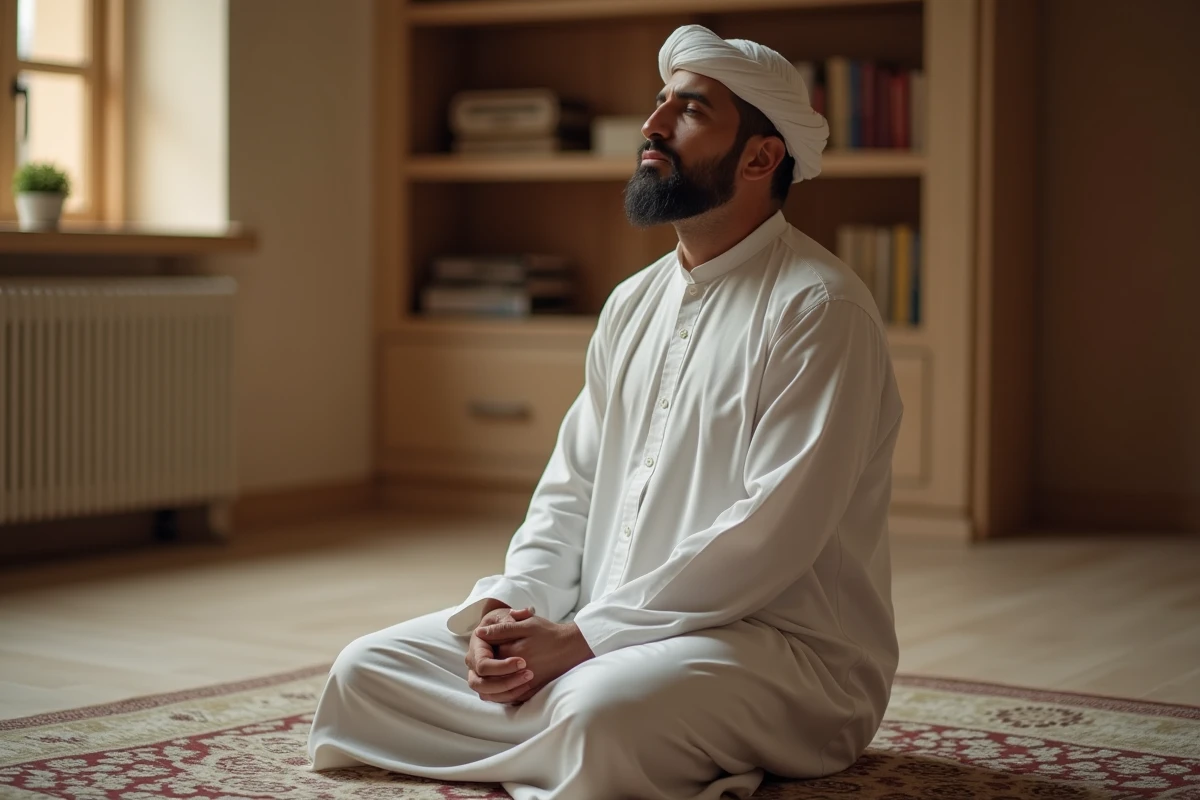
Yawning during prayer affects both regular practitioners and occasional believers, regardless of religious tradition. This phenomenon raises a two-fold question: is it due to a measurable physiological mechanism, or should it be interpreted on a spiritual level? Both interpretations coexist, and comparing them helps to better understand what truly happens when the mouth opens during invocation.
Physiological and Spiritual Causes of Yawning: Two Perspectives
| Criterion | Physiological Perspective | Spiritual Perspective |
|---|---|---|
| Attribution of Origin | Fatigue, decreased attention, lack of brain oxygenation | Action of Satan (Islamic tradition), relaxation of inner vigilance (Christian tradition) |
| Aggravating Context | Solitary prayer, low sensory stimulation, sleep debt | Lack of concentration on God, distraction of the mind |
| Proposed Solutions | Hydration, sufficient sleep, nasal breathing, upright posture | Invocations, seeking refuge with Allah, intensification of faith |
| Reference Framework | Sleep medicine, cognitive sciences | Hadiths, biblical texts, teachings of scholars |
This table highlights a point often overlooked in online content: yawning is primarily an automatic bodily response, not a judgment on the quality of prayer. The literature in physiology describes this reflex as related to fatigue, stress, or decreased attention. Reducing the phenomenon to a solely spiritual explanation ignores concrete factors that can be acted upon.
To delve deeper into this dual perspective, Klottra’s resources detail the mechanisms at play and offer tailored suggestions for each tradition.
Solitary Prayer and Attention Drift: Why Yawning Occurs More When Alone

A common observation among practitioners is that yawning mainly occurs during individual prayer. This is not a coincidence. Situations with low external stimulation favor attention drift and automatic behaviors.
When praying in a group, the presence of others, the collective rhythm, and auditory cues maintain a higher level of alertness. In contrast, solitary prayer reduces sensory stimulation, allowing the brain to shift to a less active state of alertness. Yawning then becomes a physiological signal of this decrease in attention, not a sign of spiritual weakness.
This phenomenon also explains why some believers never yawn in assembly but find themselves overwhelmed as soon as they pray in their room. The environmental context weighs more heavily than fervor.
Accumulated Fatigue and Prayer Times
Scheduled prayers early in the morning or late at night coincide with natural peaks of drowsiness. A practitioner who performs the Fajr prayer after a short night of sleep accumulates two triggering factors: sleep debt and low ambient light.
The body does not distinguish between a prayer moment and another calm moment. It reacts to the same signals: static position, half-closed eyes, regular breathing. All these conditions mimic a context conducive to falling asleep.
Yawning and Spiritual Concentration: Adjusting the Body to Free the Mind
Addressing yawning solely through spirituality is akin to treating the symptom without addressing the cause. Behavioral measures offer a concrete lever, compatible with all religious traditions.
- Getting enough sleep before demanding prayers (Fajr, night vigils) reduces the likelihood of repeated yawning. A night that is too short negates concentration efforts.
- Adopting slow and regular nasal breathing before starting prayer lowers stress levels and stabilizes attention. Mouth breathing, on the other hand, promotes the yawning reflex.
- Maintaining an upright posture, whether standing or sitting, sends a signal of alertness to the brain. A slumped body encourages drowsiness.
- Proper hydration before prayer: mild dehydration causes fatigue and reduces concentration capacity.
These adjustments do not contradict any religious prescriptions. In Islamic tradition, the hadith reported by Al-Bukhari recommends delaying yawning as much as possible and covering one’s mouth with the hand. This prophetic instruction aligns, through another path, with the idea of regaining control of the body to preserve the quality of the act of worship.
The Trap of Spiritual Guilt
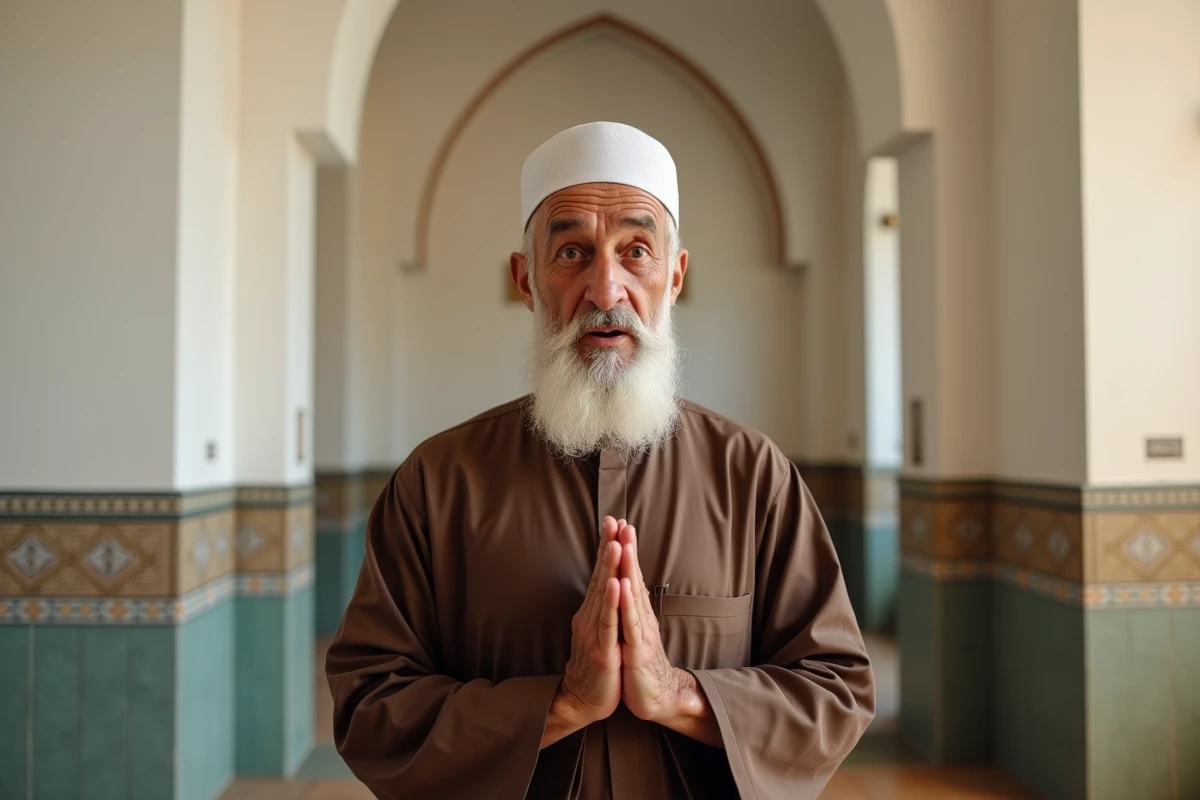
Interpreting every yawn as an attack from Satan or a lack of faith generates anxiety that paradoxically exacerbates the problem. Stress increases the frequency of yawning. A practitioner who feels guilty enters a cycle: they yawn, worry, tense up, and yawn more.
Separating the physiological reflex from spiritual evaluation allows one to break free from this loop. Yawning signals that the body needs something (sleep, oxygen, movement), not that the soul is failing.
Spiritual Vigilance and Daily Practice: What Works Over Time
Short-term solutions (covering the mouth, forcing oneself to keep the eyes open) are insufficient if the underlying conditions do not change. Spiritual vigilance is built on regular habits that prepare the body and mind for prayer.
Practitioners who report lasting improvement often share the same adjustments: a stable sleep rhythm, regular physical activity, and mental preparation time before each prayer. Reciting the Quran or reading a passage from the Scriptures a few minutes before praying serves as an attentional warm-up. The mind gradually transitions from “daily” mode to “prayer” mode.
Regularity in spiritual practice also plays a role. A believer who prays sporadically struggles more to enter a state of deep concentration than a daily practitioner whose brain has developed an attentional routine associated with prayer.
Yawning during prayer does not disappear by confronting it head-on. It diminishes when the body is rested, hydrated, well-positioned, and when the mind has been prepared to focus. Tackling physical causes upstream frees the necessary space for spiritual concentration, regardless of the tradition in which one prays.