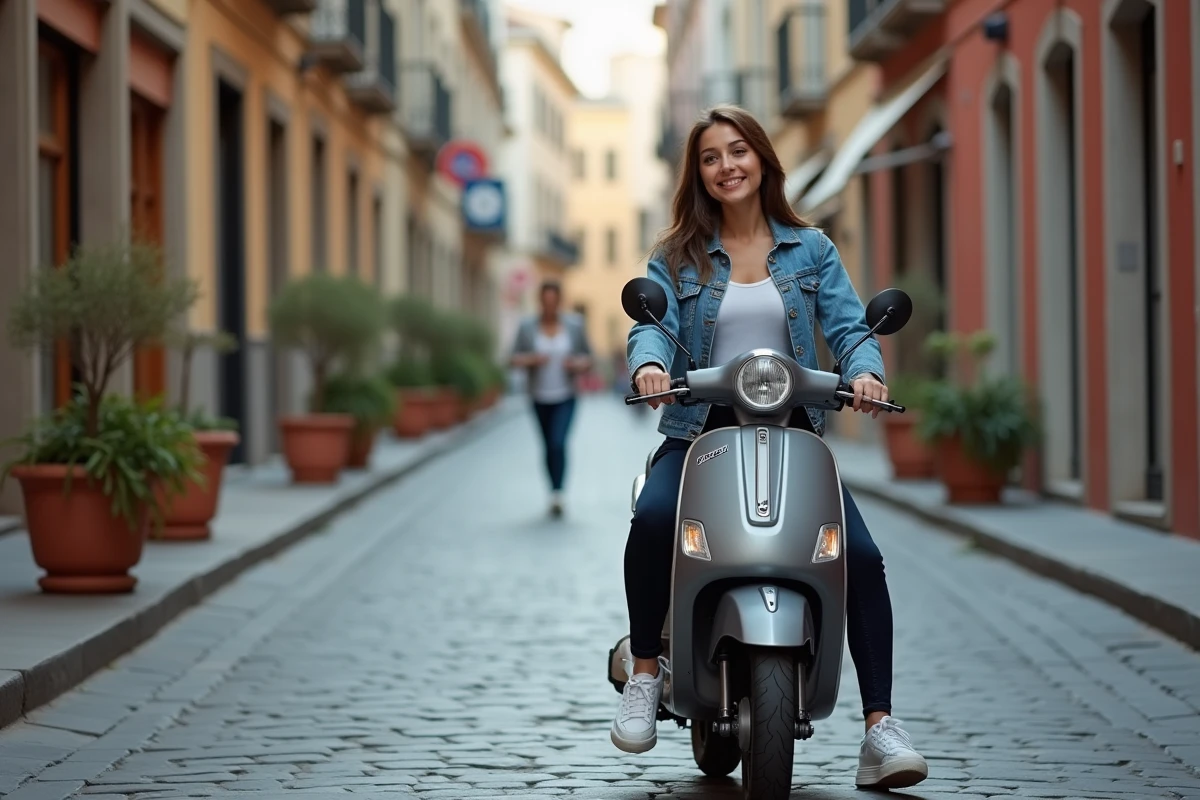
In France, the category of two-wheelers accessible without a motorcycle license is based on a precise regulatory framework. Only vehicles approved in category L1e-B (equivalent to 50 cm³, limited to 45 km/h) fall into this classification. Individuals born before 1988 can drive them without any license, while those born after this date must hold the AM license (formerly BSR).
Gas scooters, electric scooters, and now low-powered electric motorcycles share this same legal status, but their uses and limits differ significantly.
Electric motorcycles 50 cm³: the game-changing format in the license-free market
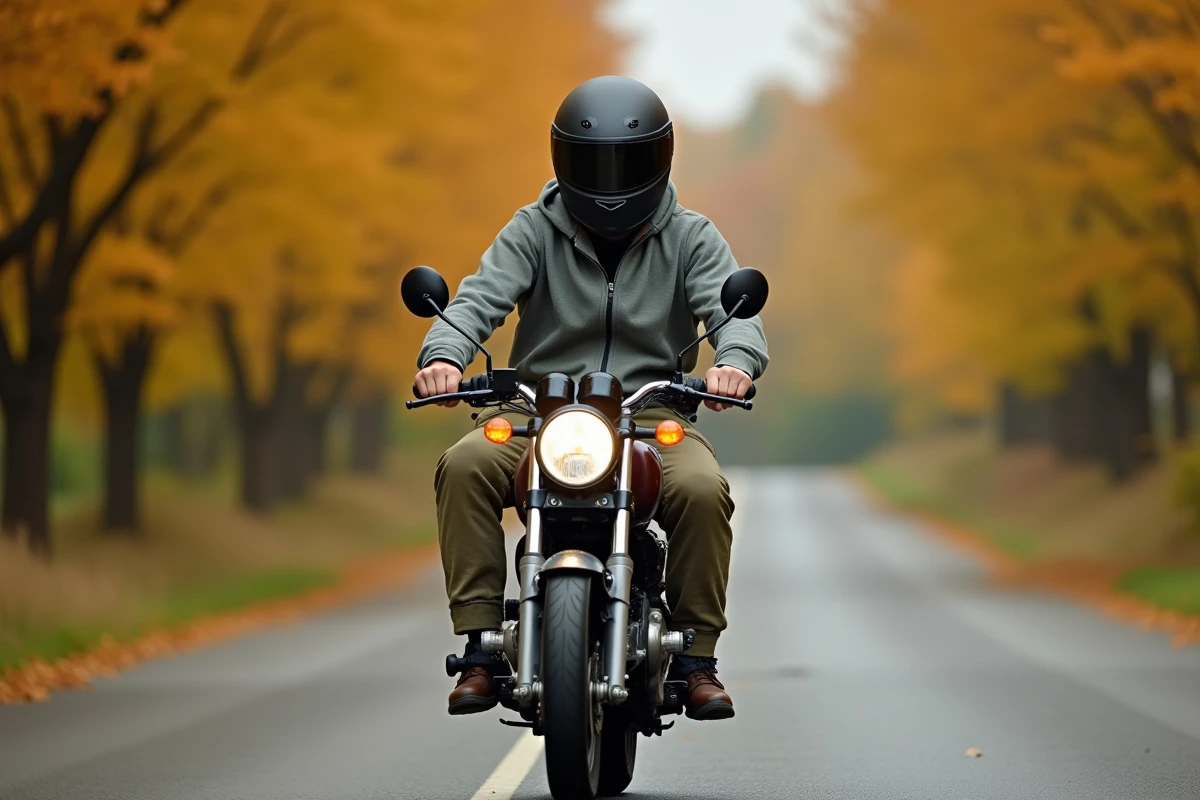
The segment of license-free two-wheelers has long been dominated by the classic urban scooter. Since 2024-2025, a shift is occurring with the arrival of motorcycle-format models, approved in category L1e-B, thus subject to the same rules as a 50 cm³ scooter. Brands like NIU, VMOTO, or Super Soco offer vehicles with inverted forks, wide tires, and a naked design, far removed from the traditional image of a scooter.
This positioning attracts a younger audience, often from the age of 14, who seek an aesthetic close to a “real motorcycle” without having to obtain an A1 license. The L1e-B approval remains the same; only the format changes. The power is capped at 4 kW maximum and the speed limited to 45 km/h, just like any moped.
To identify the best license-free scooters and motorcycles in this new generation, the raw technical sheet (speed, power) is no longer sufficient. Field feedback shows that the choice is made elsewhere.
Buying criteria in 2026: range, charging, and storage before power
Recent buying guides converge on one point: the selection of a license-free electric scooter or motorcycle is no longer based on maximum speed, which is the same for all L1e-B models. The determining criteria have become real range, charging conditions, and everyday practicality.
Range and trip profile
Practical thresholds are established as follows:
- Less than 30 km per day: an announced range between 60 and 100 km more than covers the need, with a recharge every two to three days.
- Beyond 50 km daily: aim for 120 km of range or more, which limits the choice to models equipped with high-capacity batteries or dual batteries.
- Mixed urban-suburban use: elevation changes, headwinds, and repeated accelerations in the city significantly reduce real range compared to manufacturer figures.
The range announced by the manufacturer is measured under optimal conditions. In real use, a loss of 20 to 30% is common according to user feedback.
Home charging and removable batteries
The ability to remove the battery to charge it at home or at work is a decisive advantage for residents of buildings without garages. Some NIU models, for example, feature removable batteries that charge on a standard household outlet. In contrast, models with fixed batteries require access to a nearby outlet at the parking spot, limiting their use in certain urban configurations.
Insurance and legal obligations for a license-free two-wheeler
A license-free scooter or motorcycle remains a motor vehicle. Liability insurance is mandatory, even for an electric moped limited to 45 km/h. Rates vary depending on the driver’s age, geographical area, and type of vehicle, but the annual cost is generally lower than that of car insurance.
Beyond insurance, regulations require the wearing of an approved helmet and CE-certified gloves. These obligations apply to both the driver and any potential passenger. A high-visibility vest must be accessible on board the vehicle.
Data on scooter thefts in France show that some models are more targeted than others. An approved SRA lock and an integrated GPS tracker (offered by some manufacturers) reduce the risk, but secure parking remains the most protective factor.
Gas or electric license-free scooter: what field feedback reveals
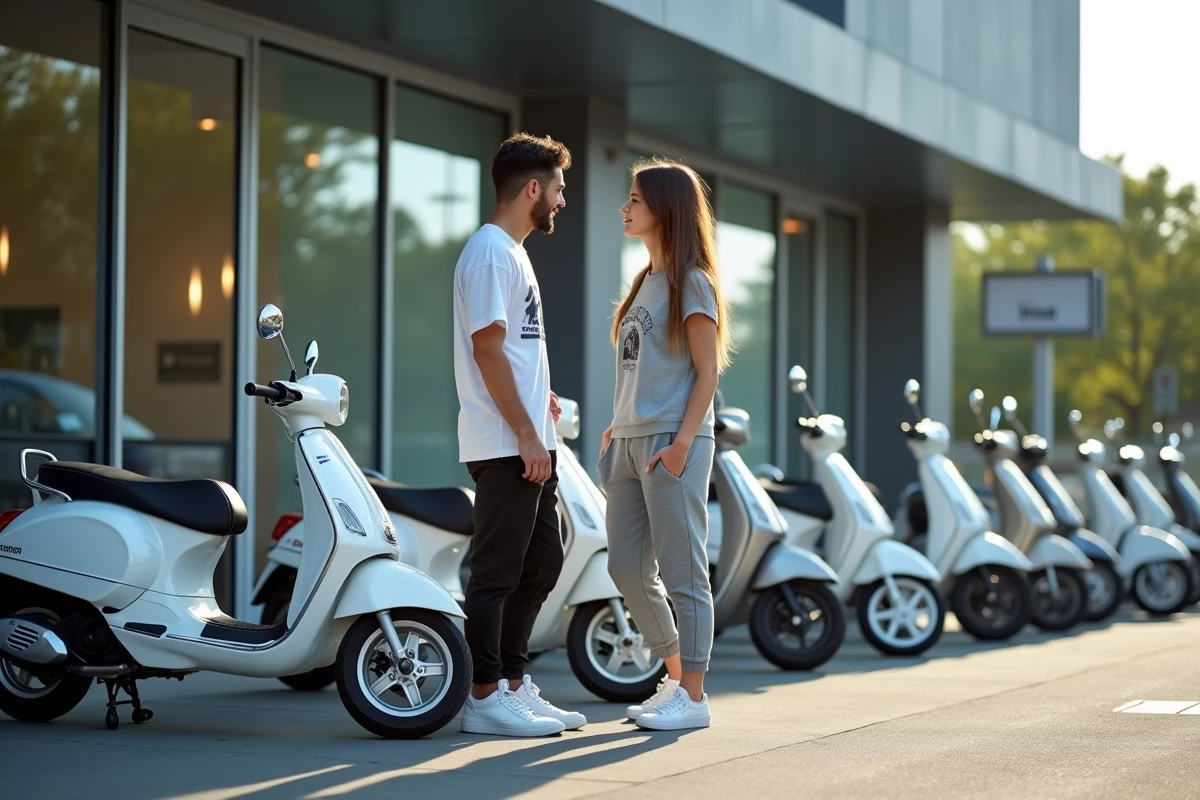
The choice between gas and electric is not just an ecological question. In terms of maintenance, an electric scooter eliminates oil changes, air filters, and spark plugs. Energy costs per 100 km are significantly lower than with a gasoline engine.
Field feedback diverges on one point: the durability of batteries over several years of intensive use. Lithium-ion technology is advancing, and some manufacturers document their charge cycles, but long-term aging data on recent models remains limited.
- Gas 50 cm³: dense network of repairers, parts available everywhere, often lower purchase price, but regular maintenance and higher cost per kilometer.
- Electric equivalent 50 cm³: minimal maintenance, reduced energy cost, silent operation, but higher purchase price and an open question about battery replacement in the medium term.
- Electric motorcycle format L1e-B: same legal framework as the scooter, different riding position, aesthetic choice that does not alter the allowed speed or power.
The market for license-free vehicles is evolving rapidly. The models available in 2026 cover more varied uses than two years ago, from commuting to replacing a second vehicle. The right choice depends on daily mileage, access to a socket, and overall budget (purchase, insurance, energy), not on a power ranking where all models are anyway at the same ceiling.