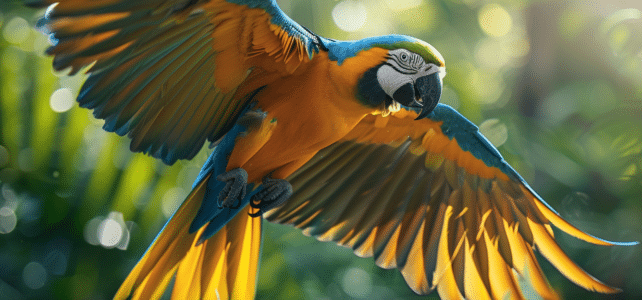
Bright colors in animals are a captivating natural spectacle filled with mysteries. Behind each flamboyant hue lies a story of evolution and survival. These chromatic manifestations are much more than mere whims of nature; they serve specific purposes, ranging from seduction during courtship displays to warning predators with aposematic signals. The study of these vibrant shades reveals the complex strategies developed by species to adapt to their environments, interact within their ecosystems, and ensure the longevity of their genes.
The secrets of bright colors in animals: meaning and function
Animal coloration offers a kaleidoscope of meanings and fulfills various functions, from social to physiological. Within this complex chromatic spectrum, aposematism stands out as a beacon of evolution, a bright signal of danger. Poisonous frogs, for example, display bright hues to announce their deadly toxicity, an effective visual communication to deter predators. This survival strategy, where color becomes a warning, illustrates the subtlety with which species can signal in nature without making a sound.
In contrast, camouflage and mimicry are tactics of discretion and imitation, where the goal is to blend in or confuse. The opposition is striking: on one hand, colors that scream ‘Attention!’ and, on the other hand, shades that whisper ‘Nothing to see here’. These opposing methods highlight the adaptability of living beings and the diversity of strategies adopted to ensure their survival. In the complex game of predation and survival, every color, every pattern has its place and purpose.
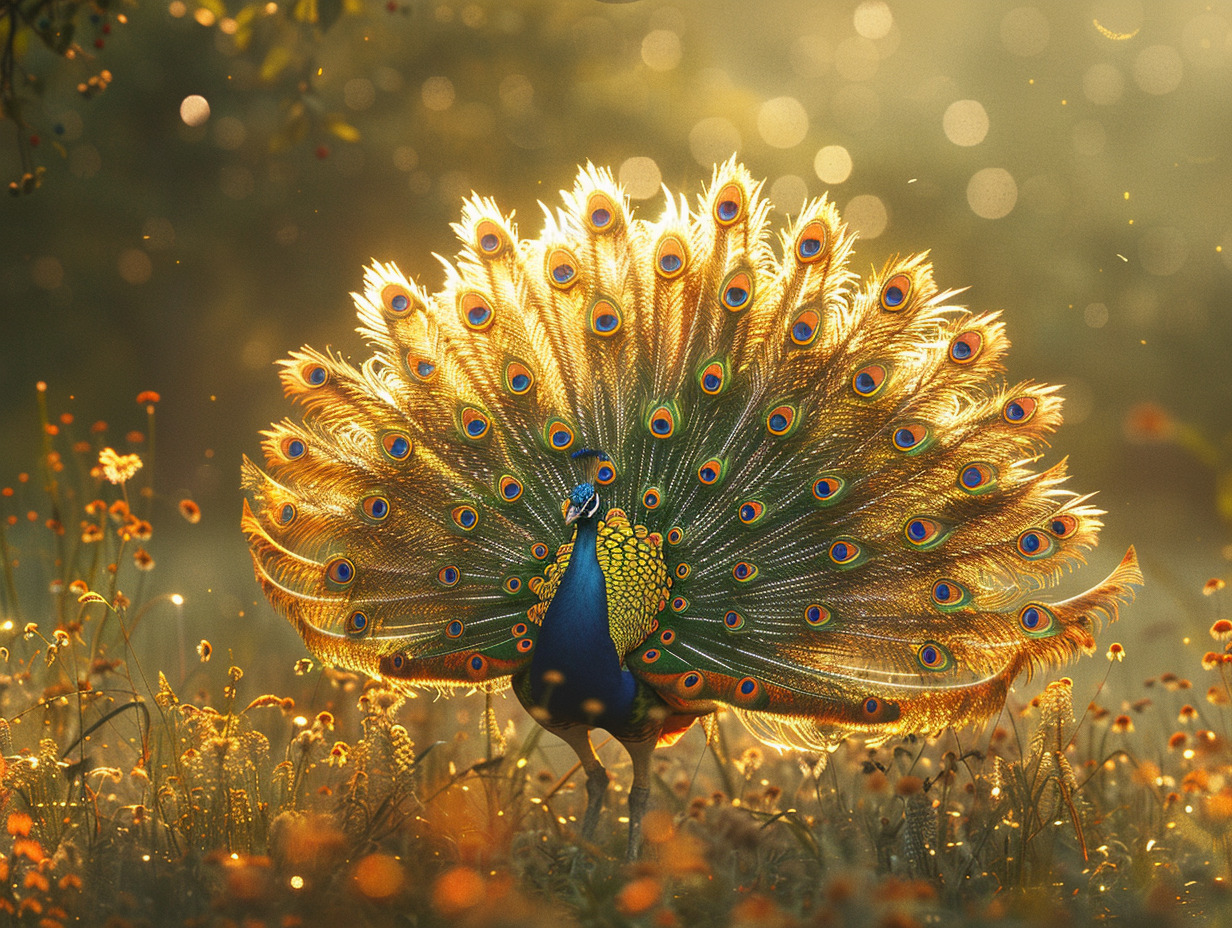
Sexual selection is another key piece in explaining vibrant hues. Courtship displays are often a festival of colors where every shade counts, every sparkle can make a difference. Whether considering the tail of a peacock or the baboon’s behind, each of these colorful attributes plays a role in attracting mates and transmitting genes. Evolution, in its endless ingenuity, has equipped animals with adornments that are not only beautiful to behold but are also true tools of biological communication.
Aposematic animals are often adorned with bright colors and contrasting patterns, a combination that serves to mark the minds and engrave a warning image in the memory of predators. These visual signals are the result of millennia of evolution, a wordless language that transcends species and generations. Nature, in its wisdom, uses color as a teaching tool, where every tone, every spot, every line is a lesson in survival.
The science behind splendor: how do animals acquire their vibrant colors?
The color palette that nature has offered its creatures is the result of complex and fascinating biological processes. pigmentation, a phenomenon at the heart of this vast range of hues, results from the interaction between the pigments present in the animal’s tissues and light. These pigments, true colored molecules, absorb certain wavelengths of light and reflect others, thus creating the visible spectrum that we admire.
But color does not come solely from the chemistry of pigments. Light diffusion also plays a fundamental role. This concept describes how incident light is modified by the microscopic structures of tissues, producing color effects that can sometimes be iridescent or metallic, like those observed on a peacock’s feathers or a fish’s scales. The diversity of shades in the natural world emanates from this duality between pigmentation and physical interaction with light.
Albino animals, on the other hand, illustrate the absence of pigmentation. Without these essential pigments to reflect light and color their appearance, they appear entirely white or translucent, a condition that makes them particularly vulnerable in their natural habitat. This genetic deviation underscores the dependence of species on their coloration for survival and adaptation.
The evolution of colors in animals is therefore a combination of genetic, biochemical, and physical factors. From the depths of the oceans to the canopy of tropical forests, living beings have developed countless strategies to exploit light and matter, in order to paint their existence in vibrant colors. This science of splendor is not just an aesthetic quest; it is a dance of life, essential for communication and survival in the natural world.