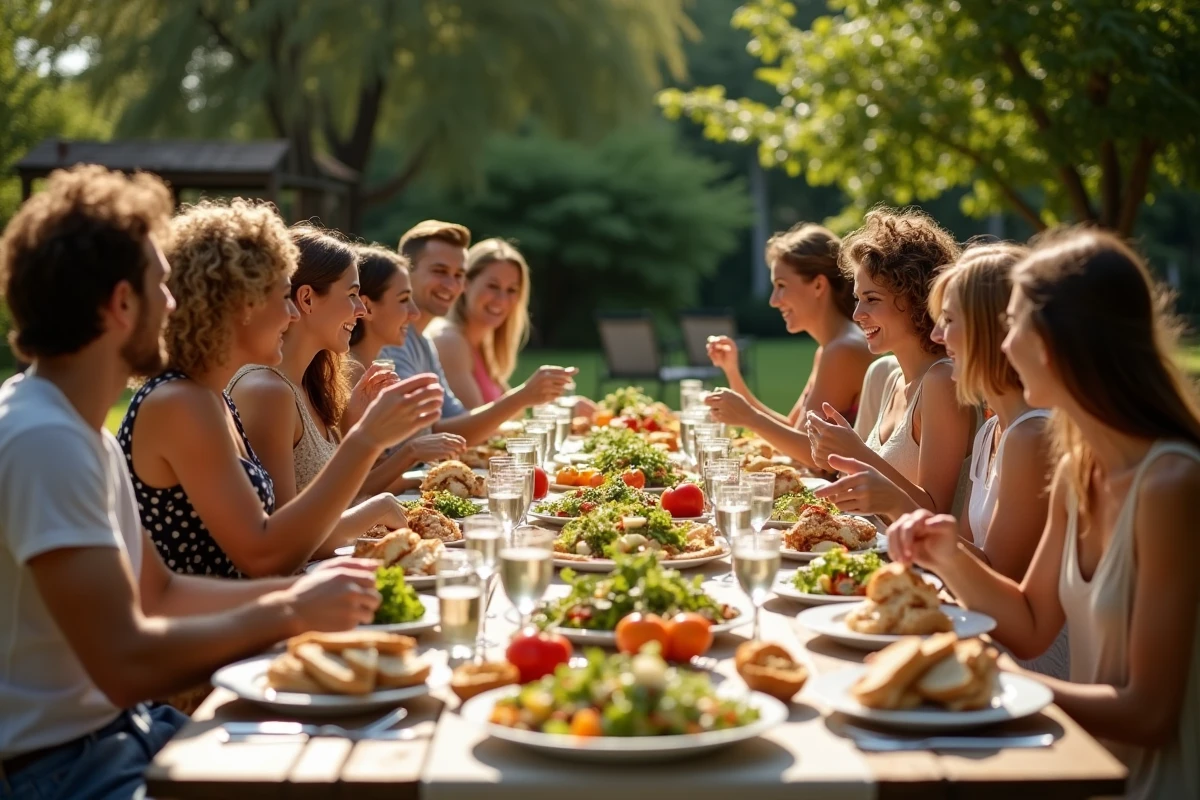
Ten people around the table, a Saturday night, and half the group sending messages asking “should we bring something?”. The real issue isn’t the recipe. It’s the logistics. A friendly menu for ten friends relies on three decisions made in advance, not on an endless shopping list.
Room Temperature Menu: The Strategy That Eliminates Oven Stress
The majority of the blockages on the big day come from one place: the oven. When planning a gratin, a roasted dish, and a baked dessert, you end up juggling incompatible cooking times. For ten people, building a menu served cold or at room temperature radically changes the game.
Everything is prepared the day before or in the morning. Vegetable terrines, savory cakes, composed salads, generous tabbouleh, filled wraps: these dishes gain flavor by resting in the refrigerator. When evening comes, you take everything out, set it up, and sit down. No timers, no hot dishes to pull out between conversations.
When looking to create a friendly menu for 10 people, this approach of everything cold or everything lukewarm remains the least risky for a host who wants to enjoy their evening as much as their guests.
“Assembly Table” Format for a Stress-Free Meal with Friends
Competitors often talk about a single dish (lasagna, couscous, blanquette). The single dish works, but it puts all the pressure on one element. If it fails or doesn’t please a guest, there’s no backup plan.
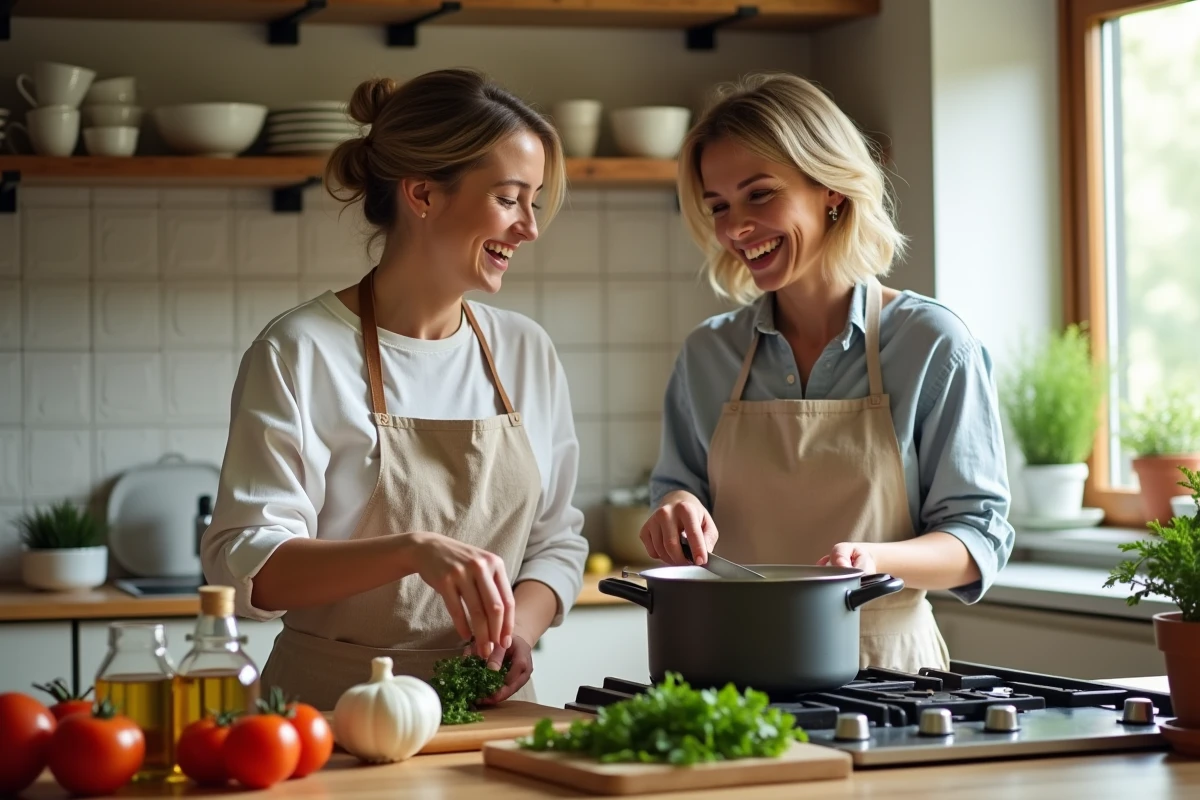
The “build your own” format reverses the logic. You place bases, toppings, and sauces in the center of the table. Each person builds their own plate. Three concrete examples that work for ten:
- Homemade tacos: warm tortillas, spicy ground meat, guacamole, chopped tomatoes, shredded cheese, sour cream. Preparing the meat and toppings takes less than an hour, and everything is placed in bowls.
- Salad bar: three bases (quinoa, cold pasta, mesclun), protein options (sliced grilled chicken, hard-boiled eggs, crumbled feta), assorted vegetables, and two homemade sauces. Each component is prepared separately, and guests help themselves.
- Giant bruschetta: plenty of toasted bread, several spreads (hummus, tapenade, herb ricotta, confit tomatoes), fine charcuterie. Assembly requires no cooking on the day if the bread is toasted in advance.
This format eliminates dietary issues without having to ask the awkward question. Vegetarians, gluten intolerants, or big eaters serve themselves according to their preferences.
Quantities and Preparation in Advance: The Real Calculation for Ten Guests
The panic over quantities often leads to cooking way too much. For ten people in a friendly mode (including appetizers, relaxed atmosphere, continuous snacking), the necessary volumes are lower than one might think.
Quantity Guidelines per Person for an Informal Meal
For a meal composed of several shareable elements (not a single dish), you can reason by category:
- Starches or bread: a standard portion per person is sufficient when there are several sides. For pasta or rice, count the usual amount multiplied by ten, without increasing.
- Proteins (meat, fish, cheese, legumes): a normal portion per person. Variety compensates for the unit volume.
- Vegetables and raw vegetables: plan generously; this is the only category where excess poses no preservation problem.
- Sauces and condiments: two to three bowls are enough for the table; fill them once at the beginning of the meal.
Preparing sauces and bases the day before reduces cooking time on the big day to less than an hour. This is the only rule that truly makes a difference between a relaxed host and an exhausted one.
Distributing the Load Without Turning the Meal into a Potluck
Asking each guest to bring a dish risks ending up with five salads and no dessert. You maintain control of the main menu and delegate specific sides: one person brings the bread, another the cheese, a third the dessert. Provide clear instructions (“a cake that can be sliced for ten,” not “something sweet”).
Stews Prepared the Day Before: The Safety Net for Large Groups
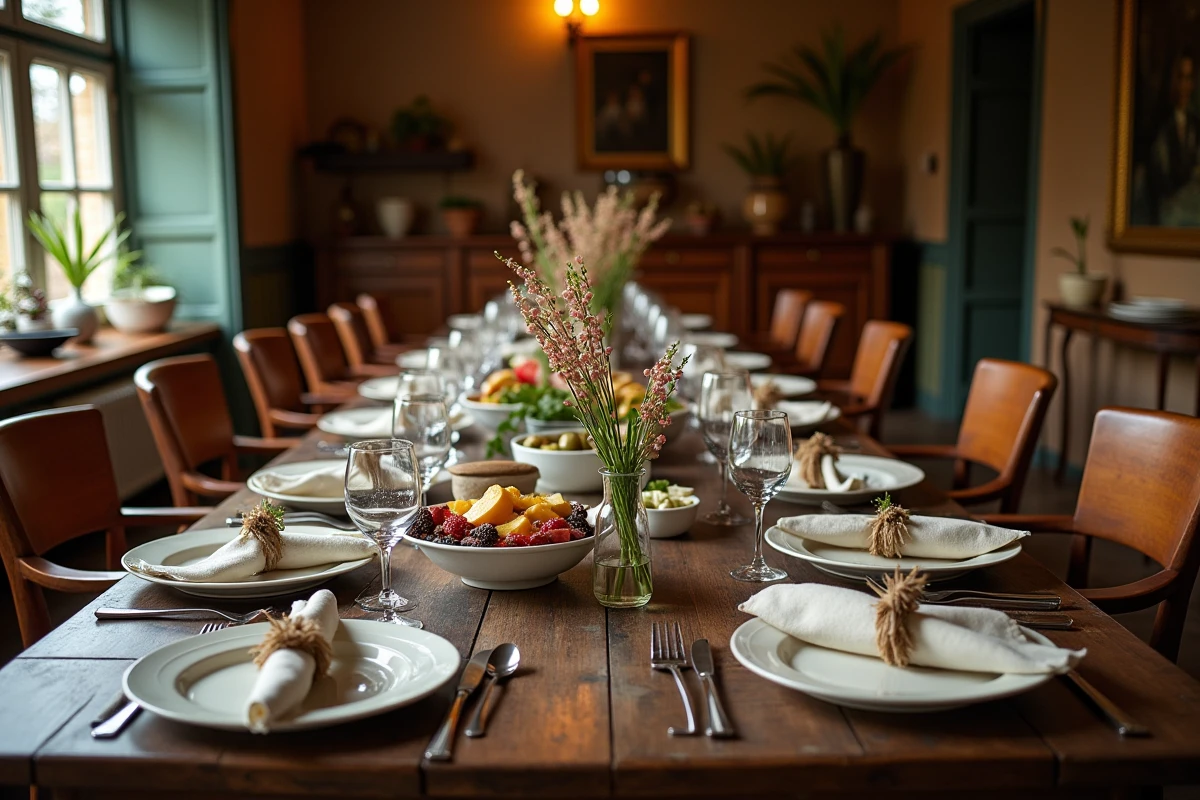
If the cold format or assembly doesn’t match the desired atmosphere (winter evening, craving a comforting hot dish), the stew prepared the day before remains the most reliable solution. Chili con carne, vegetable curry, beef bourguignon, thick ratatouille: all these dishes are better reheated.
Long cooking the day before completely frees you up on the big day. You reheat on low while guests arrive, the house smells good, and the dish is ready without intervention. For ten people, a large pot of five to six liters easily covers the needs for the main dish.
Opinions vary on the choice between cast iron pot and classic stockpot for large volumes, but both do the job. The more important point is to take the dish out of the refrigerator an hour before reheating to avoid thermal shock that prolongs the reheating time.
Dessert for Ten People: The Option of a Large Single Format
Individual desserts for ten mean extra dishes and unnecessary plating time. A large format dessert (tart, clafoutis, chocolate cake, tiramisu in a large dish) can be sliced at the table. It can be prepared in the morning or the day before.
The tiramisu for ten can be assembled in twenty minutes and requires no baking. Just multiply the proportions in a large rectangular dish. A seasonal fruit salad cut into large pieces also works very well when the meal has been rich.
A common mistake: planning an elaborate dessert after an already hearty meal. For an evening with friends, a single simple and generous dessert wraps up the meal without weighing down the table or the preparation load.