In cooking, precision is often the key to a successful result, especially when it comes to following recipes from different cultures with their own units of measurement. Whether it’s converting grams to ounces or milliliters to cups, mastering the art of conversions is essential. Dosage errors can lead to culinary disasters, ranging from failed cakes to overly salty sauces. Fortunately, there are tips and tools that allow you to navigate this world of numbers and measurements with ease, ensuring the success of every dish prepared.
The essentials for successful conversions in the kitchen
Knowing your conversion chart is the first step towards perfect mastery of measurements in cooking. Just like the baking enthusiast who juggles between grams and ounces, or the amateur cook who oscillates between milliliters and cups, using the conversion chart is akin to the precision needed to measure the distance for the game of darts: a millimeter can make all the difference. This chart, easily accessible online or printable to be displayed in your culinary space, helps you avoid conversion errors that could compromise the success of your recipes.
The kitchen scale embodies the essential tool for anyone aspiring to precision in the field of cooking. The accuracy of measurements is particularly fundamental for international recipes, where even a slight deviation can affect the texture and taste of the dish. Make sure to choose a scale that can measure small quantities accurately and offers the functionality to convert between different units of measurement.
Recipes for gluten-free cooking and mixology require special attention to the density of ingredients. A spoonful of wheat flour does not weigh the same as a spoonful of rice flour, just as powdered sugar differs from granulated sugar. For these specific cases, using measuring spoons and graduated measuring cups is recommended to ensure the proper addition of components, especially when manual conversions may be affected by this variable.
Do not overlook the role that temperature plays in cooking conversions. Converting degrees Celsius to Fahrenheit can be as tricky as measuring liquids. An incorrect temperature affects not only the cooking time but also the texture and final volume of the preparations. Digital kitchen thermometers, with their dual Celsius and Fahrenheit displays, provide a reliable solution for maintaining the accuracy of the required temperatures.

Choosing and using the right measuring tools
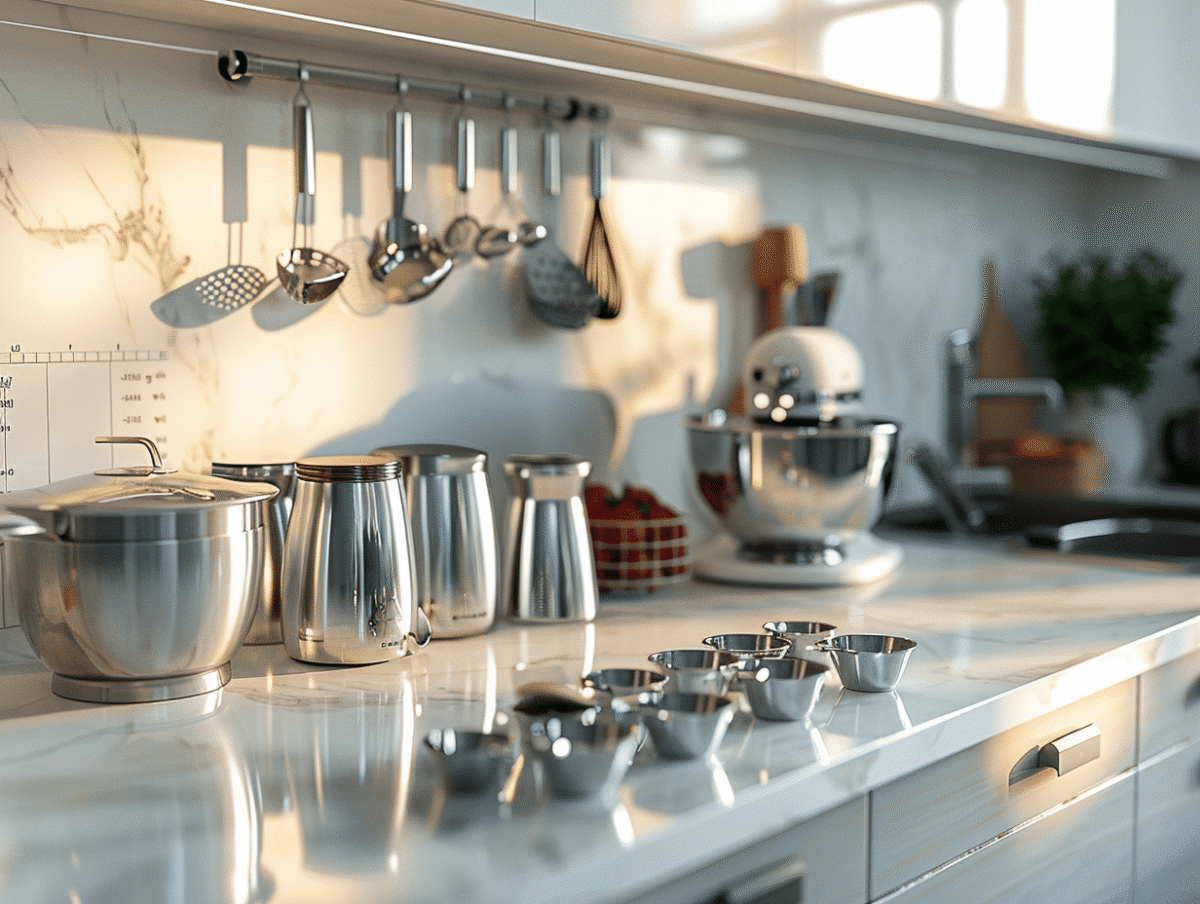
To succeed in cooking, the accuracy of quantities is paramount. Measuring utensils and instruments such as measuring spoons, the measuring cup, and the kitchen scale are invaluable allies. Prefer electronic scales that offer precision to the gram and measuring cups with clear graduations for liquids. Measuring spoons, available in different sizes, allow for accurate measurement of small quantities of dry ingredients.
The cooking temperature, on the other hand, is a significant variable in the conversion process. For precise cooking or candy making, a quality kitchen thermometer is recommended. It allows you to monitor the heat and ensure the proper transformation of foods, whether in degrees Celsius or Fahrenheit.
In the field of precision cooking tips, mobile applications and websites provide practical and immediate tools for converting units of measurement. A conversion chart from cl to ml or a dedicated app can simplify the cook’s life by offering quick and reliable conversions, thus avoiding errors that may occur during manual conversions.
Knowledge of conversion charts remains an asset. These should be present in every kitchen, allowing you to convert milliliters to centiliters, grams to ounces, and vice versa, effortlessly. They are the perfect complement to measuring utensils and offer an extra layer of security against potential errors, especially when it comes to recipes requiring a high precision of measurements.