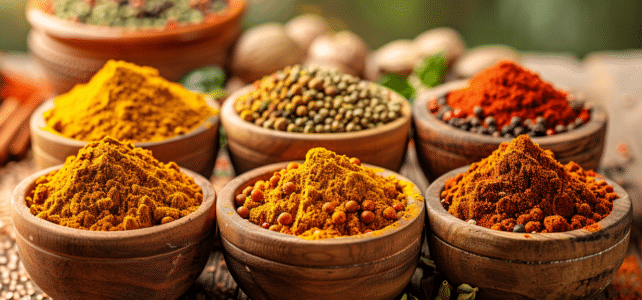
The exotic flavors of India are making their way into Western kitchens, bringing a breath of novelty and escape. With a palette of spices that have enchanting aromas, such as cumin, turmeric, or cardamom, Indian cuisine offers a unique and intense tasting experience. Incorporating these spices into everyday dishes is not just a sensory journey, but also a discovery of millennia-old culinary traditions. By exploring simple and accessible recipes, cooking enthusiasts can easily add an Indian touch to their meals, transforming the everyday into a flavorful adventure.
The keys to adopting Indian flavors in your kitchen
Indian cuisine: it stands out with a rich palette of flavors, primarily composed of spices. Introducing these spices into your cooking requires an understanding of their role not only in flavor but also in cultural, medicinal, and spiritual value. The spice route, this network of historic maritime routes, allowed for the global dissemination of these aromatic treasures, enriching the gastronomy of every continent. Let’s explore how these spices can transform your everyday dishes into culinary masterpieces.
Masalas, spice blends made from several ingredients, usually roasted and ground together, are the cornerstones of Indian cuisine. The garam masala, for example, is a warming combination of spices that easily incorporates into curries or stews. For a gentle yet spicy introduction, start with classic dishes like tikka masala sauce, whose balance of spices offers an accessible culinary journey.
Ayurvedic medicine recognizes spices for their healing properties. Use turmeric for its anti-inflammatory benefits, cumin for its digestive aid, or cardamom for its captivating aroma. These spices are not limited to traditional Indian cooking, rich in flavors and aromas; they also contribute to well-being, highlighting the link between nutrition and health. Adopt these spices in your recipes, and you will enrich your table with a therapeutic dimension inherited from Ayurveda.

Recipes and tips for an Indian touch in everyday life
Turmeric, this bright yellow spice, stands out for its ability to color your dishes as well as its countless health benefits. Incorporate it into a coconut milk curry for a sweet and colorful note, or use it as a base for authentic Indian recipes. Cumin, often roasted to release its aroma, finds its way into your spice blends. Its distinctive flavor needs no introduction to food lovers. Sprinkle it over your roasted vegetables or simmered lentils for a fragrant simplicity that warms the palate.
Cardamom, the queen of aromatic spices, finds its place in both savory dishes and desserts or teas. A staple of Indian cuisine, it infuses basmati rice for a subtly flavored side dish or slips into your pastries for a touch of exoticism. As for coriander, this fresh herb often confused with the spice of the same name, offers an unparalleled aromatic dimension to your curries. Its use in Asian cooking transcends borders, making it a must-have in Indian dishes.
The red chili, with its penetrating heat and vibrant color, is the ideal asset for those who dare to embrace intensity in their cooking. Add it sparingly to your spicy dishes for an explosion of flavors. When it comes to sourcing, find reputable brands such as MDH, Everest, Badshah, and Organic India on online shopping sites like Amazon or specialized ones like Asian Market, ensuring access to quality spices. These platforms offer you a complete palette to enrich your home cooking with Indian flavors, without leaving the comfort of your home.